
Chike bought Teak seedlings for his two-hectare plot in Anambra State and planted them with high expectations. Three years later the trees are alive but barely thin, slow, and struggling in waterlogged clay soil that Teak was never designed to handle. He did not buy bad seedlings. He bought the right tree for the wrong soil. The two are not the same problem but they produce the same result.
Every tree species has a soil it grows best in. Knowing which tree belongs on which soil before you plant saves years of waiting for a return the soil was never going to deliver.
Reality Check
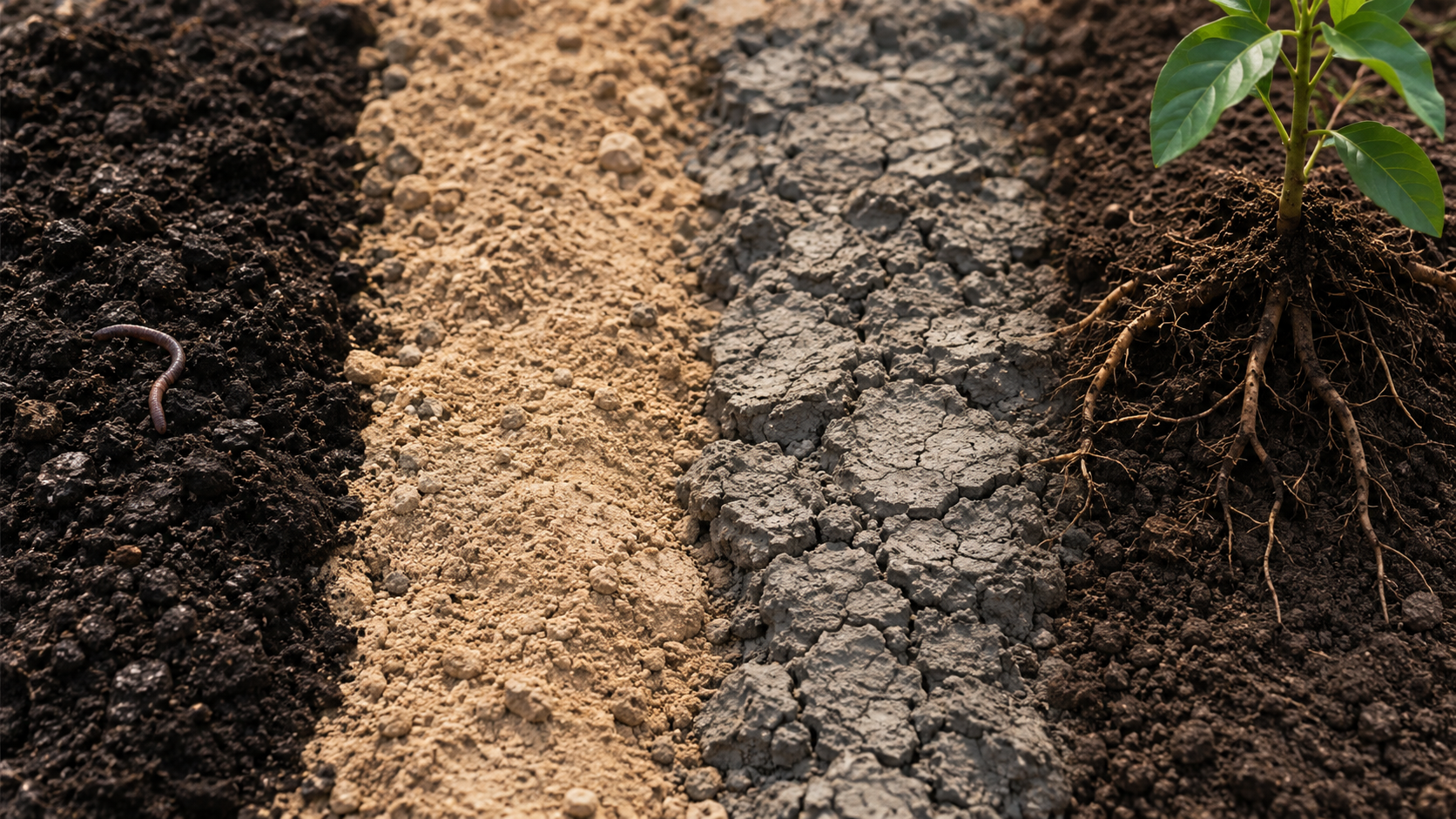
You can identify your soil type without a lab. Take a handful of moist soil and squeeze it. Sandy soil falls apart and feels gritty. Clay soil holds its shape and feels sticky. Loamy soil holds shape briefly then crumbles. For waterlogged land, the sign is simple: water sits on the surface for more than 30 minutes after heavy rain.
MATCH YOUR TREE TO YOUR SOIL
Soil Type to Tree Guide
Deep, well-drained, fertile soil:
Dark, crumbly, absorbs water quickly, earthworms present
Best trees: Teak, African Mahogany (Khaya), Iroko. High-value hardwoods that need the best ground to perform at their best.
Sandy, dry, low-fertility soil:
Light coloured, falls apart in your hand, dries out quickly after rain
Best trees: White Teak (Gmelina), Lead Tree (Leucaena), Neem. These species establish on poor ground and improve it over time through leaf litter and root activity.
Heavy clay soil:
Sticky when wet, cracks when dry, water sits on the surface after rain
Best trees: Quickstick (Gliricidia), Lead Tree (Leucaena), Bamboo. These push roots through compacted clay and gradually break it up. Avoid Teak and Mahogany on clay soil entirely.
Waterlogged or flood-prone land:
Water stands for long periods, soil smells slightly sour, surface has a grey tinge
Best trees: Raffia Palm, Black Mangrove in coastal areas. Most timber trees will not survive prolonged waterlogging. If the land floods seasonally, White Teak planted on raised mounds can sometimes manage.
Sloped land with thin, eroded topsoil:
Pale shallow soil, visible gullies, water runs off quickly
Best trees: Lead Tree (Leucaena), Quickstick (Gliricidia), Vetiver grass alongside trees. Root fast, hold the slope, and rebuild thin topsoil over time before higher-value species are introduced.
SOIL TYPE IS ONLY HALF THE ANSWER
Soil type tells you which tree can grow on your land. Your timeline tells you which one is right for your goal. A farmer who needs income in five years should look at White Teak or Lead Tree. One who can wait twenty years should consider Teak or African Mahogany on the right soil. One whose land is degraded should start with Quickstick or Lead Tree to rebuild the ground before planting anything more valuable.
The right tree matches both your soil and your timeline. Get one right and miss the other and the result is still a tree that disappoints.
Reality Check
Chike's Teak trees are not going to thrive on waterlogged clay no matter how well he manages them. The lesson is the same one this guide is trying to teach quickly and cheaply. Match the tree to the ground first. Everything else comes after.
The soil on your land is not an obstacle. It is a starting point. Know what it is, find the tree that belongs on it, and the match will do most of the work from there.