
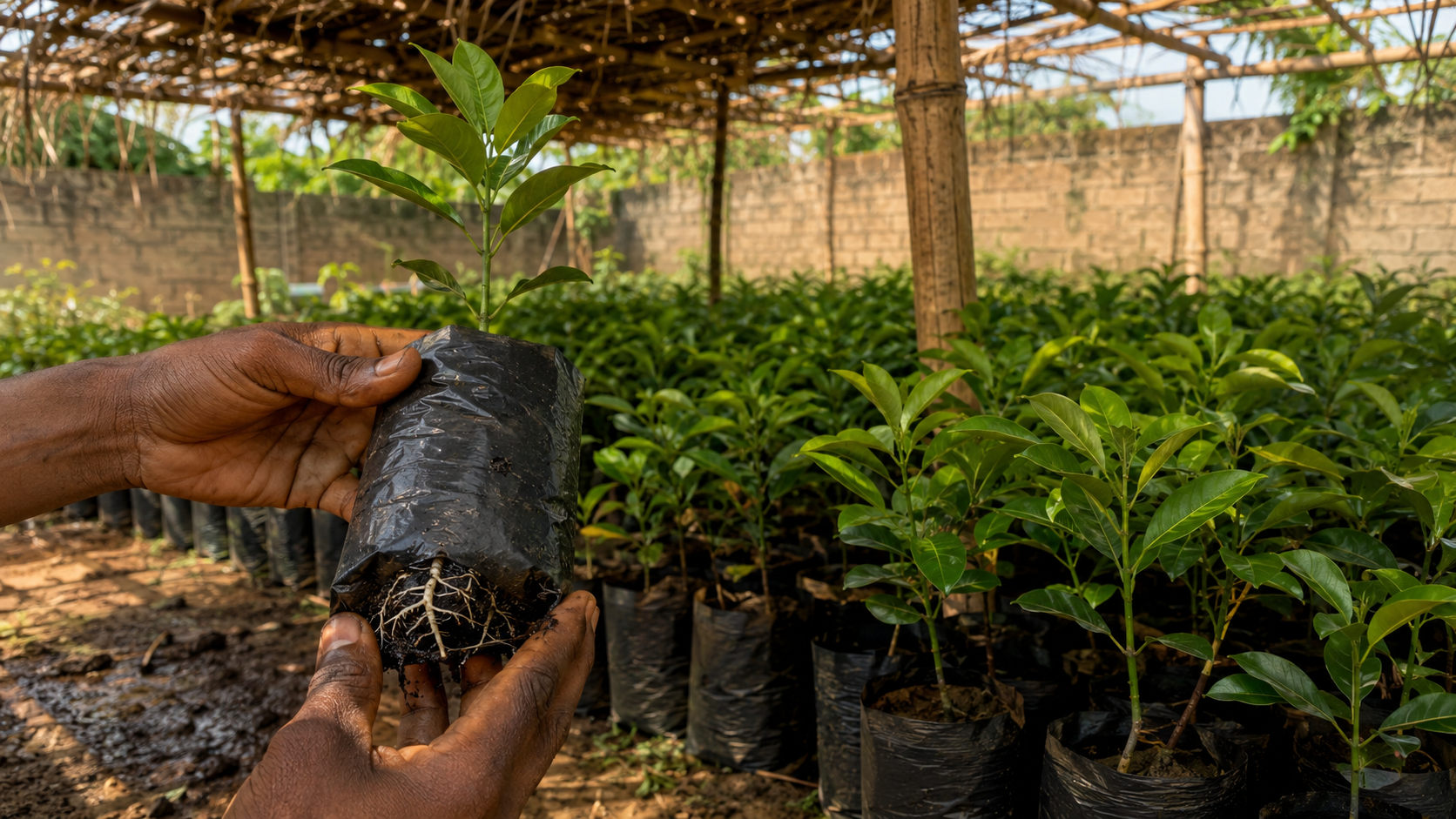
The quality of your seedling decides the quality of your tree. Most plantation failures start not in the field but in a nursery that was never set up properly.
Taiwo has planted Gmelina on his farm twice. The first time, he bought seedlings from a roadside seller three days before planting. Half of them died within the first month. The second time he grew his own from seed in a simple home nursery he built over a weekend. The survival rate was close to 100 percent. The trees that are standing on his farm today all came from that second batch. The difference was not the seed. It was the start.
A tree nursery does not need to be complicated or expensive. It needs to be consistent. Consistent moisture, consistent shade, consistent growing medium, and a clear plan for when the seedling is ready to leave. Get those four things right and the nursery does the rest on its own.
Reality Check
A seedling grown in a properly managed nursery develops a stronger root system, a thicker stem, and better resistance to transplant shock than one pulled from an unmanaged source. That head start shows up in field survival rates, early growth speed, and the long-term quality of the timber or fruit the tree eventually produces.
Choose the Right Spot and Build a Simple Shade Structure
The nursery needs partial shade, not full sun and not full darkness. Direct sun all day dries seedlings out too fast and stresses young leaves before they are ready to handle heat. Full shade makes them weak and leggy as they stretch toward light. The ideal is a spot that gets morning sun and afternoon shade, or a simple shade structure built from bamboo poles and palm fronds or shade netting that lets through about 50 percent of available light.
The nursery does not need to be large. A space of two by three metres is enough to raise several hundred seedlings at one time, which is more than enough for most smallholder planting plans.
Fill Your Bags With the Right Growing Mix
Polythene nursery bags are the standard container for tree seedlings in Nigeria and are available at most agro-input shops cheaply. Fill them with a mix of two parts good topsoil, one part sharp sand, and one part compost or well-aged manure. This mix drains well enough that roots do not sit in water, holds enough moisture that the seedling does not dry out between waterings, and provides enough nutrients to carry the seedling through its nursery stage without needing any additional fertiliser.
Do not use soil dug from waterlogged or compacted ground. It drains poorly, compacts further inside the bag, and stunts root development before the seedling ever reaches the field.
Water Consistently and Watch the Roots, Not Just the Leaves
Water the nursery once in the morning and once in the evening during hot dry weather. In cooler or rainy weather, once a day or every other day is enough. The test is simple: push your finger one centimetre into the soil in the bag. If it feels dry at that depth, water. If it still feels moist, wait.
The seedling is ready to move to the field when three things are true: it has been in the nursery for eight to twelve weeks, its stem is firm and woody rather than soft and green, and its roots are beginning to show at the drainage holes at the bottom of the bag. Planting before these signs appear puts a seedling in the field before it is ready to survive there.
Reality Check
The week before transplanting, move the nursery bags into full sun for a few hours each day. This is called hardening off. It prepares the seedling for the full sun conditions of the field gradually, so the change is not a shock. Seedlings transplanted without hardening off often drop their leaves in the first week and take weeks longer to establish.
Taiwo's second batch of Gmelina is now four years old and growing on schedule. He has not bought a single seedling from a roadside seller since. Every new planting cycle starts in the same corner of his compound, in the same simple shade structure, with the same soil mix he learned to make in an afternoon.
A good nursery is not a luxury for large operations. It is the foundation every tree on your farm is built on.