
You already have the skill. The demand is already there. The gap between the two is smaller than most farmers think.
After Taiwo set up his home nursery and grew his own Gmelina seedlings successfully, his neighbour asked if he could grow some for him too. Then another farmer two streets away asked the same thing. Then a landowner from the next village called. Taiwo had not planned to be in the seedling business. But the market had decided for him.
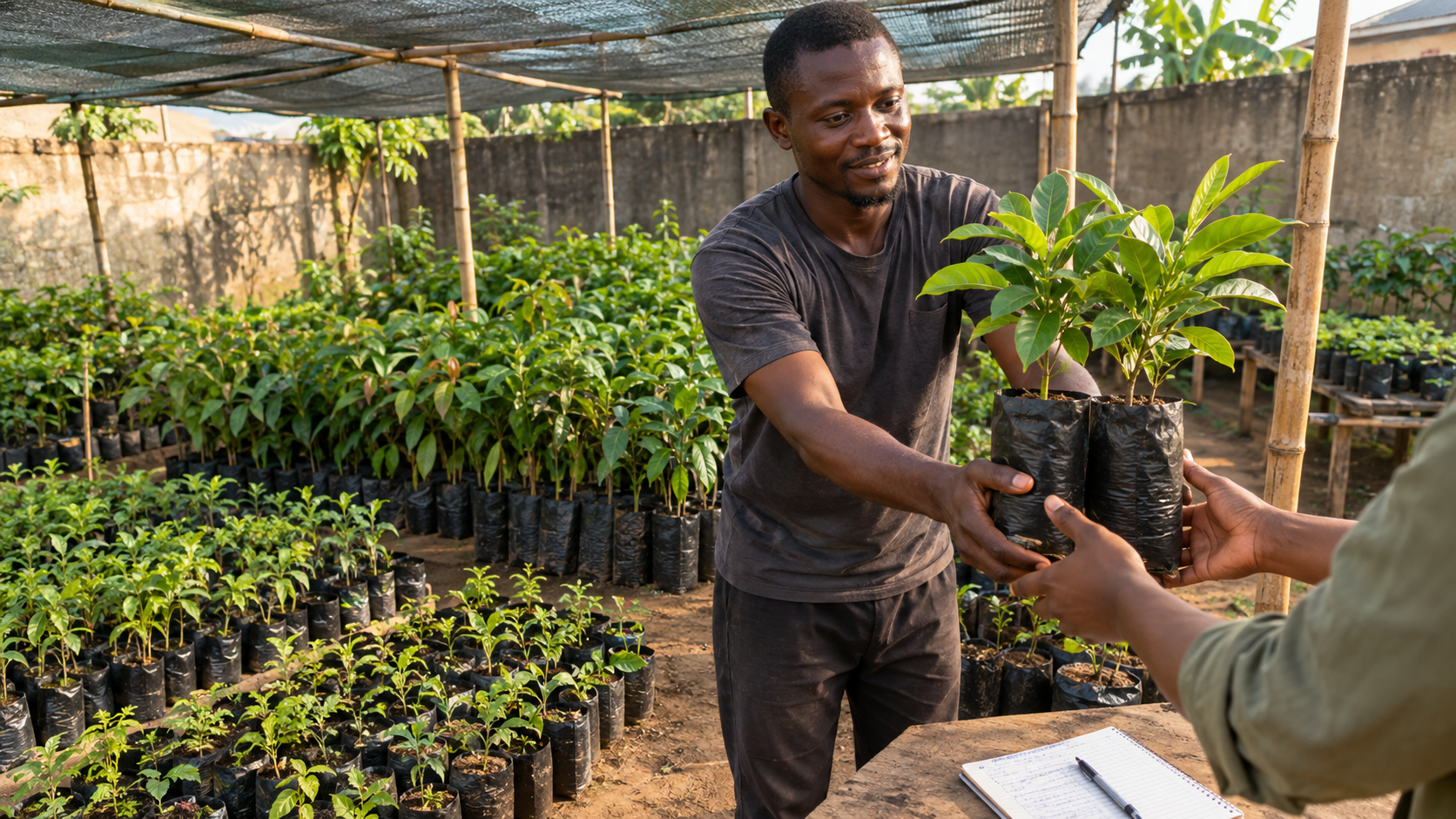
Demand for quality tree seedlings consistently outstrips supply across most Nigerian states. Gmelina, Teak, Moringa, and Neem seedlings are needed by plantation owners, agroforestry farmers, estate developers, and government planting programmes every single season. Most of them struggle to find reliable sources of healthy, well-grown seedlings at reasonable prices. A farmer with a well-managed home nursery is sitting on exactly what those buyers need.
Reality Check
The seedling business has one of the lowest startup costs of any agricultural enterprise. The infrastructure is a shade structure and some polythene bags. The input is seed, soil, and water. The product is ready in eight to twelve weeks. No cold chain. No processing. No heavy machinery. The main investment is the knowledge of how to grow a strong seedling, which this brand has already covered in a previous guide.
Start With the Species That Sell Most Reliably in Your Area
Not every seedling sells equally well in every location. Before expanding your nursery for commercial production, spend two weeks talking to farmers, landowners, and agro-input dealers in your area. Find out which species they are planting or planning to plant. Find out where they currently buy their seedlings and what they pay. Find out what they complain about with their current suppliers, which is almost always inconsistent quality or unreliable availability.
In most Nigerian states, Gmelina and Teak are the most consistently demanded timber seedlings. Moringa sells well in areas with strong health product or export markets. Neem is in demand for shade, medicine, and organic pest control. Start with one or two species you can grow well before expanding the range.
Scale the Nursery in Stages, Not All at Once
The most common mistake farmers make when moving from personal nursery to commercial production is scaling too fast. They buy thousands of bags, fill them all at once, and then discover that germination rates, watering demands, and sales timelines do not line up the way they expected. The result is either a glut of unsold seedlings or a cash flow gap that stalls the whole operation.
Start with a batch of 200 to 500 seedlings. Sell that batch completely before starting the next one. Use each cycle to refine your germination process, understand your local demand, and build a small list of repeat buyers. Once you have sold three consistent batches to reliable customers, expand the production size. The nursery should grow with the demand, not ahead of it.
Price Correctly and Sell on Quality
The seedling market in Nigeria is often underpriced because most sellers do not communicate quality. A healthy, well-rooted seedling grown in a properly managed nursery with correct soil mix and hardening-off preparation is worth significantly more than a roadside seedling pulled from open ground with damaged roots. Most buyers do not know the difference until after planting, when survival rates tell the story.
Make your quality visible. When a buyer visits, show them the roots coming through the bottom of the bag. Explain the soil mix. Tell them the seedlings have been hardened off. These are not selling points most nursery operators mention, which is exactly why mentioning them sets you apart. Charge a fair price for quality work and find buyers who understand value rather than competing on price with roadside sellers who cannot deliver the same result.
Reality Check
A farmer who supplies 500 quality Gmelina seedlings per month at a fair market price is running a reliable income stream from a corner of their compound. That income does not depend on rainfall, does not require a harvest season, and improves steadily as the buyer list grows and repeat orders come in. The nursery that started as a cost-saving exercise becomes a business that pays for itself and more.
Taiwo now runs three planting cycles a year from a nursery that takes up less than 20 square metres of his compound. He sells to six regular buyers and has a waiting list for his next Teak batch. He still grows seedlings for his own farm. The business grew out of doing that one thing well.
The nursery you built for yourself is the business someone else is already looking for.