
Every tree on your farm is dropping one of the most valuable soil inputs available. Most farmers are burning it. Here is what to do instead.
Every dry season morning on Chukwuemeka's Gmelina plantation in Imo State, his farmhand rakes up the fallen leaves into neat piles and sets them on fire. The smoke rises, the ash blows away, and the ground is left clean and bare. Chukwuemeka has always done it this way. It looks tidy. It feels like maintenance. What it actually is, is expensive. Those leaves represent months of nutrients the trees pulled from deep in the soil and concentrated into organic matter that was ready to feed the next growing cycle. He burned them in twenty minutes and bought fertiliser the following week to replace what he destroyed.
Every tree on a Nigerian farm is running a continuous soil improvement programme at no cost to the farmer. Its roots bring up minerals from deep below the surface that crops cannot reach on their own. Those minerals move into the leaves. The leaves fall. If they are left to decompose, everything the tree pulled up returns to the topsoil where the crops can use it. If they are burned, that cycle is broken and the farmer pays to replace it artificially.
Reality Check
A single mature Gmelina tree drops between 20 and 40 kilograms of dry leaf matter per year. Across a plantation of 300 trees, that is between 6 and 12 tonnes of organic material returning to the soil annually at zero cost. The equivalent amount of organic matter purchased as compost or manure would represent a significant input expense every season.
Leave the Leaves Where They Fall
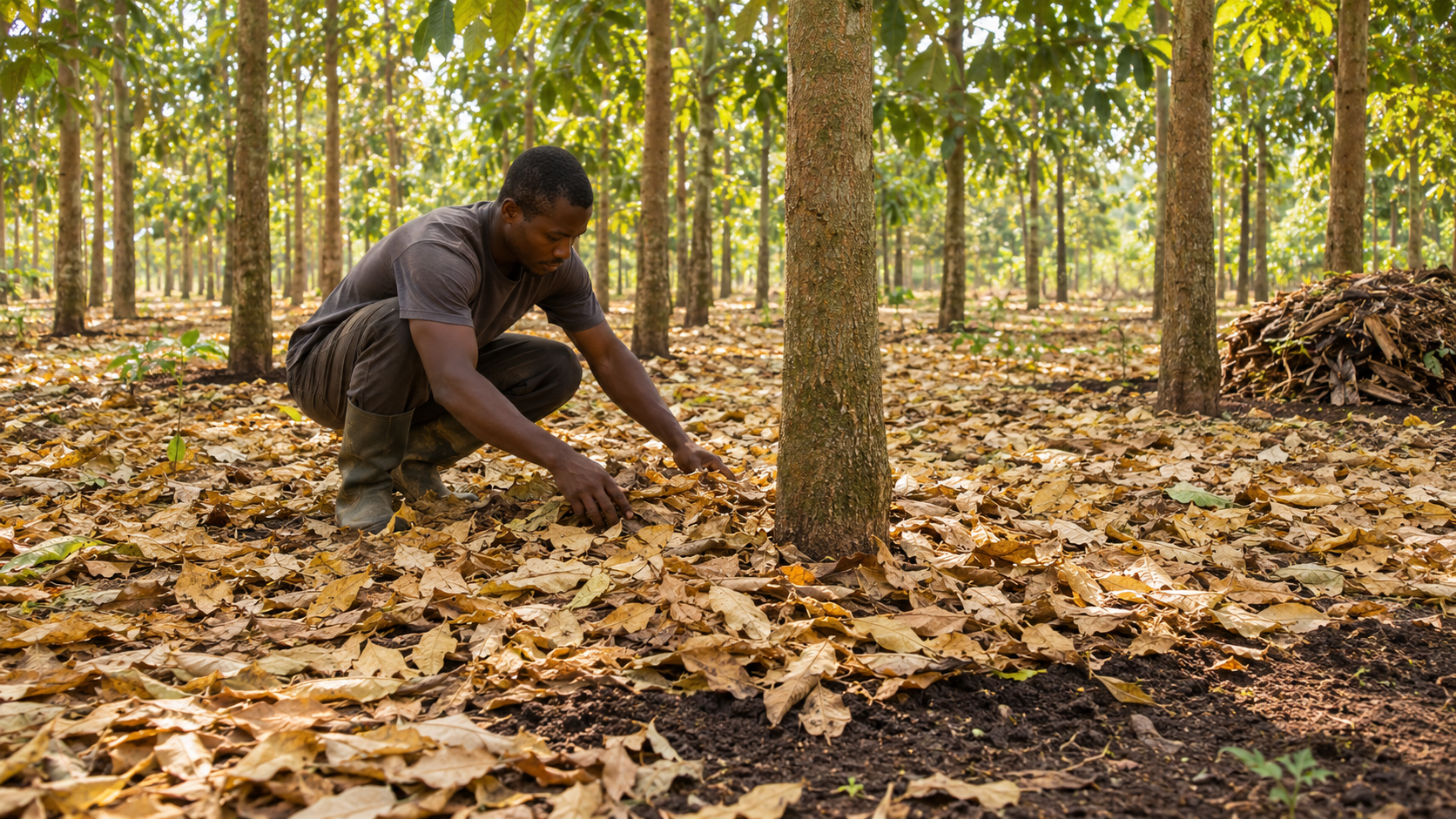
The simplest and most effective thing a farmer can do with fallen tree leaves is nothing. Leave them on the ground between the tree rows and let them decompose naturally. As they break down, soil microbes and earthworms process them into humus, the dark, stable form of organic matter that improves soil structure, increases water retention, and feeds the next generation of crops and trees growing above it.
The only management required is to avoid raking leaves into thick, compacted piles that mat together and prevent air and water from reaching the soil beneath. Spread them loosely or let them fall and redistribute naturally with wind and rain. A thin, even layer of decomposing leaves across the plantation floor is the ideal condition. It suppresses weeds, keeps the soil cool and moist, and feeds the soil biology continuously through the dry season.
Use Leaves as Mulch Around Crops and Young Trees
Fallen leaves from trees like Gmelina, Neem, and Moringa make excellent mulch material for vegetable beds, young tree bases, and food crop plots. Collect them before they fully decompose and spread a five to eight centimetre layer around the base of crops and trees, keeping the material a few centimetres away from direct stem contact to prevent rot.
Neem leaves in particular have natural pest-deterring compounds that make them especially useful as mulch around vegetable crops. As the mulch breaks down over the growing season it releases nutrients slowly into the soil beneath, reducing the need for fertiliser applications and improving the soil structure at the same time. This is the same benefit that mulching with purchased straw or compost provides, at zero cost.
Add Bark and Wood Chips to Your Compost Pile
Pruned bark, small branches, and wood chips from plantation management are carbon-rich materials that make an excellent addition to any compost pile. As we covered in our composting article, good compost needs a balance of carbon-rich dry material and nitrogen-rich wet material. Fresh cattle manure or green crop waste provides the nitrogen. Bark, dry leaves, and wood chips provide the carbon. Mixed in the right proportion and turned regularly, they break down into finished compost within eight to twelve weeks.
Bark from Neem trees also carries some of the same natural compounds as the leaves, which adds mild pest-deterring properties to finished compost made with it. This is not a replacement for a proper integrated pest management programme but it is a useful additional layer of protection for soil biology that costs nothing to include.
Reality Check
A farmer with trees on their land already has access to a continuous, self-renewing supply of mulch, compost carbon, and soil organic matter. The only decision is whether to use it or burn it. Farmers who stop burning and start leaving or collecting their leaf litter consistently report visible improvements in soil moisture retention and crop performance within two growing seasons, without any additional input cost.
Chukwuemeka's farmhand still rakes the leaves every dry season morning. But he does not burn them anymore. Half go around the bases of the young trees as mulch. The other half go into the compost pile beside the plantation. The fertiliser bill last season was 30 percent lower than the season before. The soil between the tree rows is visibly darker than it was two years ago.
The improvement was always there. It just needed to stop being burned