
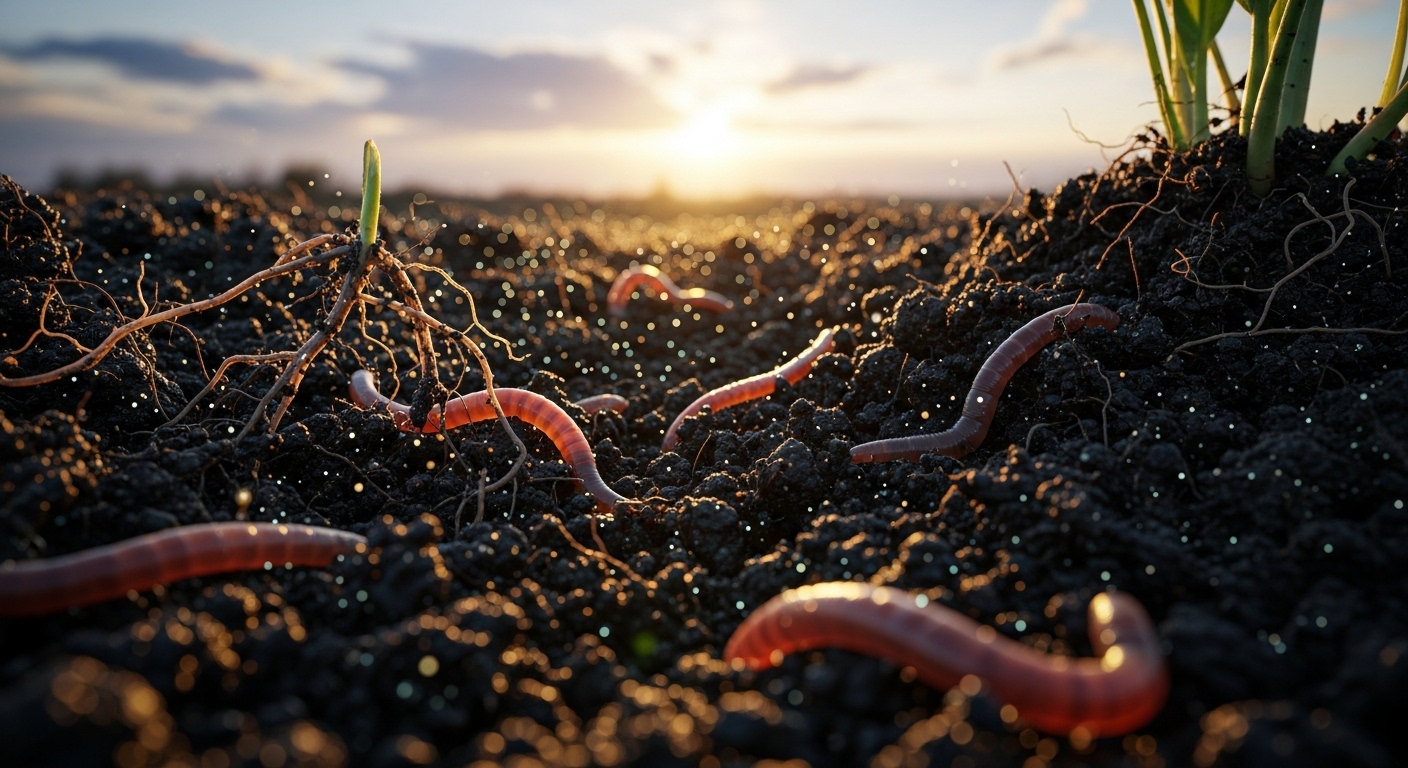
Ten years ago, Segun stood on the edge of his family’s north field and saw something that broke his heart: gray, cracked earth that looked more like concrete than a cradle for life. Decades of heavy tilling and chemical “quick fixes” had left the land exhausted. When the rain came, it didn’t soak in; it simply washed the precious topsoil away into the nearby creek.
But today, if you walk that same field on Segun’s farm, the ground feels like a sponge. It’s dark, crumbly, and teeming with earthworms. Segun didn’t just save his livelihood; he invited nature back to the table. By switching to Regenerative Agriculture, he proved that we don’t have to choose between feeding our communities and saving the planet. We can do both, starting with the very dirt beneath our boots.
Beyond Sustainability: What is Regenerative Agriculture?
You’ve likely heard the word “sustainable” a thousand times. But while sustainability aims to keep things from getting worse, Regenerative Agriculture is more ambitious it aims to make things better.
Think of it as a holistic philosophy. Instead of treating a farm like a factory where you “input” chemicals to “output” food, regenerative agriculture treats the land as a living ecosystem. The goal is to restore the organic matter in the soil, which has been depleted by industrial farming over the last century.
The Four Pillars of Soil Restoration
To understand how healing the earth is possible, you have to look at the practices that turn “dirt” back into “soil”:
- Minimizing Soil Disturbance: By practicing “no-till” farming, the underground “internet” of fungi and microbes stays intact.
- Keep the Soil Covered: Soil should never be naked. Using cover crops protects the ground from erosion and keeps living roots in the system year-round.
- Plant Diversity: Nature hates a monoculture. Rotating different types of crops breaks pest cycles and naturally balances the nutrients in the dirt.
- Integrating Livestock: When managed correctly, grazing animals mimic natural herd movements, providing natural fertilization and helping to cycle nutrients back into the earth.
The “Sponge Effect”: Can Soil Really Fight Climate Change?
The science is simple but profound. Healthy soil acts as a carbon-rich sponge.
- Carbon Sequestration: Through photosynthesis, plants pull CO2 from the atmosphere and pump carbon sugars through their roots to feed soil microbes. This effectively “locks” carbon underground.
- Water Management: For every 1% increase in soil organic matter, an acre of land can hold an additional 20,000 gallons of water.
This means that during a drought, a regenerative farm stays green longer. During a flood, the soil absorbs the water instead of letting it run off and cause damage.
The Bottom Line: Does It Increase Yield?
There is a common misconception that choosing the environment means sacrificing productivity. While there is often a transition period where the land needs to “detox” and heal, the long-term data tells a different story:
| Metric | Conventional Farming | Regenerative Farming |
| Input Costs | High (Synthetic fertilizers & pesticides) | Low (Biological processes do the work) |
| Resilience | Low (Vulnerable to weather extremes) | High (Soil holds moisture and nutrients) |
| Yield Stability | Declines as soil health fails | Increases and stabilizes over time |
| Nutrient Density | Often lower | Significantly higher |
By focusing on the health of the soil, you aren’t just growing more food; you’re growing better food. Plants grown in nutrient-rich soil are naturally more resistant to pests and disease, reducing the need for expensive chemical interventions and increasing the farmer’s profit margins.
A Future Rooted in Hope
So, is it possible to heal the earth from the ground up? The answer is a resounding yes. Farmers like Segun are living proof that when we work with nature instead of against it, the earth responds with abundance.
The numbers back this up: scientific studies, including the Rodale Institute’s 40-year trial, show that regenerative systems can produce 31% higher yields than conventional farms during years of extreme drought due to their superior water-holding capacity. For every 1% increase in soil organic matter, the land can hold an additional 20,000 gallons of water per acre, effectively “climate-proofing” the farm. Furthermore, while there is often a brief transition period, research from the Ecdysis Foundation found that regenerative corn farms were 78% more profitable than their conventional counterparts. This financial success stems from a massive reduction in expensive synthetic inputs fertilizers and pesticides combined with higher soil productivity, proving that restoring the earth is not just an environmental necessity, but a superior economic model.
Regenerative agriculture isn’t just a set of techniques; it’s a commitment to leaving the world better than we found it. It’s a way to ensure that the soil remains a source of life for generations to come.