Sadly, The Soil Beneath Your Feet Is Dying; And You Can’t Tell By Looking.

We obsess over seeds, rainfall, and fertiliser. But the most important part of farming is the one we ignore completely: the soil..

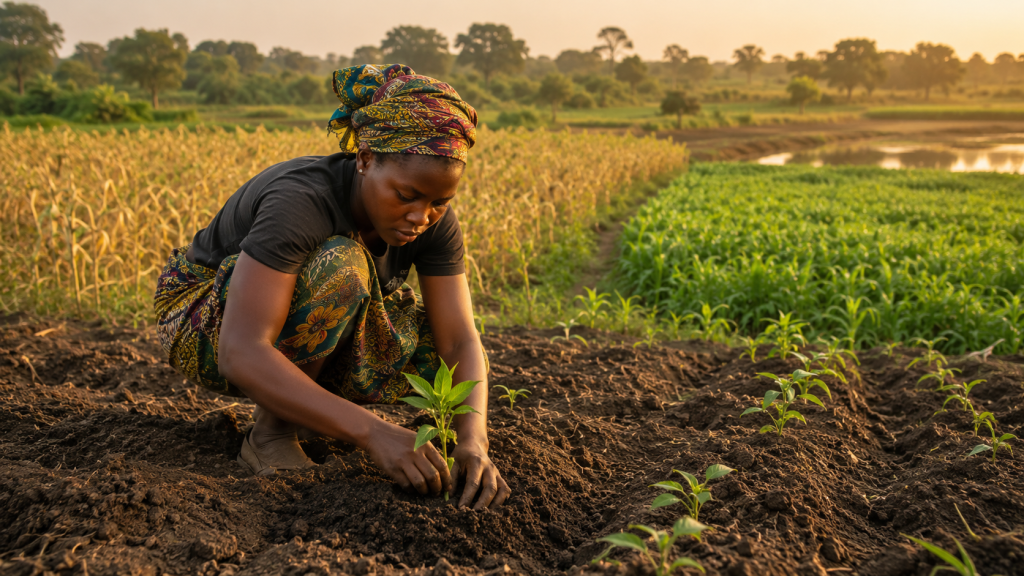
You’ve probably walked past a farm and thought nothing of the ground. Brown, flat, unremarkable. Just dirt. But that single square metre of earth beneath a healthy Nigerian farm holds more living organisms than there are people on the entire planet. Bacteria, fungi, earthworms, nematodes, an invisible city working around the clock to turn dead matter into food.

Now here’s the uncomfortable truth: for most of Nigeria’s farmland, that city is being evacuated. Quietly, invisibly, and at a speed that won’t show up in the harvest until one season, suddenly, it does.

For generations, we treated soil the way we treat roads something to be used, not maintained. We assumed the ground would simply keep giving. But at Exploreland Farms, it’s infrastructure. And like any infrastructure left without care, it is slowly, silently failing us.

The Invisible City Under Every Farm

Here’s what most people don’t know: plants don’t actually eat soil. They eat what’s in it. Specifically, they eat the byproducts of millions of microbial transactions happening just beneath the surface. Fungi extend the reach of roots by up to 100 times, ferrying phosphorus and water from places roots could never reach alone. Bacteria break down organic matter into the nitrogen that makes crops green and fast-growing. Earthworms aerate the soil, creating the tiny air pockets that stop roots from suffocating.

Destroy that invisible city through over-tilling, heavy chemical use, or leaving soil bare between seasons and you don’t just lose microbes. You lose the entire system that makes farming possible without endlessly expensive inputs.

Reality Check

Healthy soil isn’t brown dirt. It’s a living organism. A single teaspoon of rich farmland contains more microbes than there are humans who have ever lived on Earth. When that teaspoon goes quiet, no amount of fertiliser fully replaces what it did for free.

Nigeria’s Quiet Erosion Crisis

Nigeria loses an estimated 3.5 billion tonnes of topsoil every year to erosion, the equivalent of losing thousands of farms’ worth of fertile ground every single year. That’s not a distant environmental statistic that’s the fertile layer that took centuries to form, washing into rivers and gutters during every heavy rainy season. In the South-East alone, gully erosion has already swallowed farmland the size of small towns.

But erosion is just the dramatic, visible version of a deeper problem. The subtler crisis is degradation soil that is still there, still being farmed, but slowly being stripped of its biological life. The culprits are familiar:

  • Continuous mono-cropping: Planting the same crop in the same spot season after season starves the soil of the variety it needs to stay biologically active. It’s the agricultural equivalent of eating only bread for five years.
  • Over-tilling: Every time a tractor churns the soil deeply, it destroys the fungal networks that take years to build and exposes stored carbon to the air releasing it as COâ‚‚ and leaving the soil lighter, looser, and more vulnerable to the next rain.
  • Bare soil between seasons: Leaving farmland exposed with no cover crop is like leaving your skin unprotected in the harmattan. The sun bakes it, the wind strips it, and the rain compacts it into a crust that water can’t penetrate.

The result? Farmers apply more fertiliser to compensate for declining soil health, which further disrupts the microbial balance, which requires even more fertiliser the following season. It is a treadmill expensive, exhausting, and moving in the wrong direction.

The Good News: Soil is one of the few systems we’ve damaged that can actually recover, faster than most people think.

Here is what makes soil remarkable compared to every other piece of degraded infrastructure: it can heal itself if you let it, and if you help it.

The regenerative farming practices quietly spreading across Nigerian agric circles are not complicated or expensive. They are, in many ways, a return to the wisdom that small-scale farmers practised before industrial monoculture arrived and told everyone to do it differently.

  • Cover cropping: Planting legumes or grasses between main crop cycles feeds the soil microbes, fixes nitrogen naturally, and keeps the topsoil anchored when the rains arrive.
  • Reduced tillage: Letting the earthworms and fungi do the turning rather than the tractor. Counterintuitive, but the data is clear  no-till plots in comparable Nigerian climates show significantly higher water retention and lower input costs within three seasons.
  • Composting and mulching: Returning organic matter to the soil is not just waste management  it is the most direct way to rebuild the biological city that makes everything else possible.

Researchers working with smallholder farms across the Benue and Niger River basins have documented measurable improvements in soil organic matter within as little as three to five years of consistent regenerative practice. Three to five years  for something that took centuries to degrade.

Reality Check

Degraded soil doesn’t announce itself. Yields decline slowly 2%, 5%, 8% per season until the farmer assumes it’s the seeds, the rain, or the market. By the time the land looks sick, it has often been sick for a decade.

The Stakes Are Bigger Than One Farm

Soil health isn’t just a farming conversation. It sits at the intersection of everything Nigeria is trying to solve at once food security, import dependency, climate resilience, and rural income.

Healthy soil holds water like a sponge, reducing the devastation of both drought and flood. It sequesters carbon, making every regenerating farm a quiet participant in the global climate effort. And it reduces the input costs that currently make Nigerian smallholder farming one of the most expensive, least profitable forms of food production on the continent.

We have spent years debating seeds, subsidies, and supply chains. All of those conversations matter. But they are happening on top of a foundation that is crumbling beneath our feet sometimes literally.

The most radical thing a Nigerian farm can do right now isn’t adopt the latest drone technology or plant a faster-growing species. It is to stop treating the ground as a tool and start treating it as a partner. Feed the soil first. The soil will feed everything else.

Thank you for reading.

Urban Forestry Isn’t Just Aesthetics Surprisingly!

We’ve all been there. You’re walking down a city sidewalk in the dead of July, and the heat feels personal. It’s bouncing off the glass buildings, radiating from the black asphalt, and shimmering off the hoods of parked cars. You feel like a French fry in a giant air fryer.

Then, you turn a corner.

Suddenly, the air is five degrees cooler. The harsh glare of the sun is replaced by shifting, emerald-green light. The roar of the city drops to a dull hum. You take a breath that actually feels like oxygen. That’s the moment you realize: that oak tree on the corner isn’t just “scenery.” It’s a biological superhero working a double shift to keep the neighborhood livable.

For a long time, we treated city trees like “outdoor wallpaper” and nice to look at, but ultimately decorative. But if we look at the data, it turns out our leafy neighbors are the hardest-working members of the urban workforce.

The Silent Roommates Who Actually Pay Rent

If a tree were a person, it would have the most impressive resume in the city. When we move past the aesthetics, we find that urban forests are high-performing infrastructure.

  • The Ultimate AC Unit: Trees don’t just block the sun; they sweat. Through a process called evapotranspiration, they release water vapor that actively chills the air. In a concrete jungle, a healthy canopy can drop peak temperatures by 2°C to 8°C. That’s the difference between a pleasant walk and heatstroke.
  • The Invisible Filter: Cities are messy. Between car exhaust and industrial dust, our lungs take a beating. A single mature tree can soak up about 150kg of CO2​ a year, while its leaves act as a giant magnet for nasty particulate matter (PM2.5​) that would otherwise end up in your respiratory system.
  • The Flood Defense: Ever wonder where all that rain goes when it hits the pavement? Usually, it overwhelms the sewers. But trees act like giant sponges. A thick canopy can catch 10% to 20% of a rainstorm before it even touches the ground, saving the city millions in flood damage.

The Reality Check: A tree is the only piece of city infrastructure that gets more valuable as it gets older. A bridge or a road starts falling apart the day it’s finished; a tree just keeps getting better at its job.

More Than Just Planting a Tree

Humanizing forestry means acknowledging that it’s about people. Urban forestry isn’t just about sticking a sapling in a hole and walking away; it’s about intentional care.

1. Fairness in the Shade

If you look at a heat map of almost any city, you’ll notice something unsettling: the wealthiest neighborhoods are usually the greenest and coolest. The hottest, most “gray” neighborhoods often correlate with lower-income areas. Modern urban forestry is trying to fix this “canopy gap,” ensuring that everyone, regardless of their zip code has the right to a cool breeze and clean air.

2. The Right Tree, the Right Place

We’ve learned the hard way that you can’t just plant one type of tree everywhere. Today, foresters act like matchmakers. They look for street-smart trees; species that can handle salt, drought, and cramped roots, while making sure there’s enough variety so that one bad bug doesn’t take down the whole neighborhood.

3. Tech Meets Twigs

It sounds like science fiction, but we’re now using laser scanning solutions and AI to manage the woods. We can create 3D maps of a city’s canopy to see exactly where we need more shade or which trees are feeling stressed before they even turn yellow. It’s high-tech healthcare for the lungs of our city.


The Takeaway

The next time you find yourself under a big, leafy canopy on a hot day, give it a silent “thank you.” That tree isn’t just standing there looking pretty; it’s filtering your air, lowering your electric bill, and keeping your stress levels in check.

We don’t just live near the urban forest; we live because of it.

The Gmelina Enormous Contribution to the Industrial Forestry Economy.

In the world of forestry, time is often the biggest barrier to entry. Traditional hardwoods can take decades, sometimes even a lifetime, to reach a harvestable size. However, as global demand for wood products skyrockets, a new category of “sprinter” species is taking center stage. Leading this pack is Gmelina arborea, a tree that is redefining the speed of the “tree economy” and providing a sustainable solution for industrial wood needs.

In the context of industrial forestry, Sprinter Species refers to trees characterized by high photosynthetic efficiency and rapid biomass accumulation, allowing them to reach economic maturity in a fraction of the time required by traditional hardwoods. While a slow-growing marathon tree like Oak or Mahogany focuses on high-density wood over decades, a sprinter is biologically programmed to prioritize vertical and radial growth to capture the canopy as quickly as possible.

Other Notable Sprinters

While Gmelina is a top contender, the industrial forestry landscape features several other high-velocity species:

  • Eucalyptus (Eucalyptus spp.): Perhaps the most widely planted industrial tree globally, known for being incredibly hardy and producing vast amounts of biomass for pulp and charcoal.
  • Acacia (Acacia mangium): A nitrogen-fixing sprinter often used to rehabilitate degraded soils while providing wood for furniture and pulp.
  • Poplar (Populus spp.): The sprinter of the temperate world, widely used in the Northern Hemisphere for matches, crates, and plywood.
  • Bamboo: Though technically a grass, it is the ultimate biological sprinter, reaching full height in a single growing season and maturing for harvest in just 3 – 5 years.

Why Gmelina Trumps the Competition

While Eucalyptus and Acacia are formidable, Gmelina arborea is often preferred in specific tropical industrial contexts for several key reasons:

1. The Working Quality of the Wood

Unlike Eucalyptus, which can be prone to growth stresses that cause the wood to split or warp during sawing and drying, Gmelina is remarkably stable. It has a straight grain and a uniform texture that makes it much easier to machine, peel for veneer, or turn into high-quality plywood.

2. Aesthetic Versatility

Gmelina produces a beautiful, creamy-white to pale yellow wood that takes stains and paints exceptionally well. While many other fast-growers produce dark or inconsistent colors, Gmelina’s “blank canvas” look makes it highly desirable for the furniture and interior decor industries.

3. Termite and Decay Resistance

In tropical climates, wood longevity is a major concern. Gmelina contains natural extractive compounds that make its heartwood moderately resistant to decay and termite attacks; a significant advantage over many other soft-textured “sprinter” woods.

4. Environmental Footprint

One of the primary criticisms of Eucalyptus is its “water-greedy” nature, often drying out local water tables. Gmelina is generally considered more “neighborly” to the surrounding ecosystem. Its large, deciduous leaves drop annually, creating a thick mulch layer that suppresses weeds and returns vital nutrients to the topsoil, essentially “self-fertilizing” the plantation.

5. The Perfect Density Balance

Many sprinters grow so fast that their wood is too soft or “spongy” for structural use. Gmelina hits a sweet spot; it is light enough for easy transport and processing, yet dense enough to hold screws and nails securely, making it a true multi-purpose industrial timber.

The Need for Speed: Meeting Global Demand

The global appetite for pulp, paper, and plywood is relentless. As the world moves away from single-use plastics and toward wood-based construction and packaging, the pressure on natural forests has reached a tipping point.

Industrial forestry requires “sprinter” species because traditional slow-growing forests simply cannot keep pace with market cycles. If an industry has to wait 40 years for a harvest, it cannot respond to sudden shifts in the global economy. Fast-growing plantations act as a “pressure valve,” providing a reliable, high-volume supply of timber that protects old-growth, high-biodiversity forests from being cleared for industrial use.

Biology of the Best: A Deep Dive into Gmelina Arborea

Among the giants of industrial forestry, Gmelina arborea (often simply called Gmelina) stands out as a biological marvel. Originally native to Southeast Asia but now thriving across the tropical belts of Africa and Latin America, Gmelina is prized for its extraordinary growth rate.

  • Growth Velocity: In optimal tropical conditions, Gmelina can grow up to 3 meters in its first year and reach a harvestable diameter for pulp in as little as 5 to 7 years.
  • Fiber Quality: Its wood is remarkably versatile. It produces a creamy-white timber that is lightweight yet surprisingly strong. Its high-quality fiber makes it a premier choice for the pulp and paper industry, while its stability makes it ideal for plywood, light furniture, and particleboard.
  • Resilience: The tree is famously hardy, capable of thriving in a variety of soil types and showing a strong resistance to many common pests that plague other industrial monocultures.

From Nursery to Harvest: The Technical Cycle

Managing a fast-rotation timber plantation is more akin to high-precision farming than traditional “set it and forget it” forestry. The technical cycle requires meticulous planning to ensure maximum yield:

  1. Nursery Excellence: The cycle begins with superior genetic stock. Seedlings are nurtured in controlled environments to ensure high germination rates and robust early growth.
  2. Strategic Spacing: Unlike wild forests, Gmelina is planted in precise grids (typically 3m x 3m). This spacing allows for mechanical maintenance while ensuring every tree gets the sunlight it needs to fuel its rapid metabolism.
  3. Active Management: Because these trees grow so fast, they are hungry. Silviculture practices, including early weeding and strategic thinning are essential to ensure the nutrients in the soil go directly into the most promising trunks.
  4. The Harvest: Within 6 to 10 years, the plantation is ready. The clear-felling and immediate replanting cycle ensure that the land remains productive and carbon-sequestering year after year.

Diversifying the Portfolio: The Tiered Financial Model

While Gmelina is a powerhouse for quick turnover, the most sophisticated forestry projects use a tiered return model. This involves mixing fast-growing industrial species with slower-growing, high-value hardwoods.

  • Short-Term (5 – 10 Years): Gmelina provides the “cash flow.” These early harvests cover the operational costs of the farm and provide early dividends to stakeholders.
  • Long-Term (20+ Years): Meanwhile, species like Teak or Mahogany grow quietly in the background. These are the savings accounts trees that require more patience but yield significantly higher market prices per cubic meter once they mature.

By diversifying the species on a single plot, landowners create a balanced ecosystem that is both financially resilient and ecologically diverse.

In conclusion, the integration of fast-growing species like Gmelina into the global supply chain is no longer just an option; it is a necessity. By treating timber as a renewable crop rather than a finite resource, we can satisfy the world’s industrial hunger while allowing our natural, ancient forests to remain standing.

Water Scarcity and the Future of Farming in Nigeria.

Nigeria stands at a critical crossroads in 2026. Long celebrated for its vast arable land and significant water bodies, the nation is currently grappling with a “water paradox.” While the Niger and Benue rivers continue to flow, the reliability of water for the country’s over 35 million smallholder farmers has reached a breaking point.

The 2026 farming season is defined not by the presence of water, but by its unpredictability. As climate change shifts from a distant threat to a daily operational hurdle, the future of Nigerian agriculture depends on how quickly the sector can transition from “rain-fed” to “water-smart.”


The 2026 Outlook: A Season of Uncertainty

According to the Nigerian Meteorological Agency (NiMet), the 2026 outlook warns of “false starts” in rainfall. Early showers in March may tempt farmers to plant, only to be followed by severe mid-season dry spells between June and August. This variability is creating a regional divide in how farmers approach their land.

RegionPrimary 2026 Water ChallengeRecommended Adaptive Strategy
NorthDesertification & extreme heat stressDrought-tolerant seeds (Millet, Sorghum)
Middle BeltUnstable rainfall & Farmer-Herder conflictIntercropping & organic manure for moisture
SouthFlash flooding & water pollutionRaised ridges & flood-resistant varieties

Moving Beyond Rain: The Rise of “Simple Irrigation”

The era of waiting for the first rain is ending. Experts now argue that relying solely on rain-fed agriculture is a “business risk” that Nigeria can no longer afford. The Federal Government and international partners like the World Bank (via the TRIMING project) have pivoted toward expanding irrigation infrastructure.

The focus in 2026 has shifted to “Simple Irrigation” low-cost, scalable solutions that don’t require massive dams:

  • Solar-Powered Boreholes: These are becoming common in the North, providing a consistent water supply without the high cost of diesel.
  • Drip Irrigation: Delivering water directly to the root zone, reducing waste by up to 50%.
  • Rainwater Harvesting: Communities are increasingly building recharge ponds and check dams to capture runoff for use during dry spells.

The Genetic Edge: Drought-Resistant Crops

Seed technology is the second pillar of survival. In collaboration with the IITA (International Institute of Tropical Agriculture), new varieties of “climate-smart” crops are being distributed. These include:

  • Early-maturing Maize: Designed to reach harvest before the predicted mid-season dry spells.
  • Deep-rooting Cassava: Capable of accessing moisture deep within the soil profile during heatwaves.
  • Flood-tolerant Rice: Vital for the riverine communities in the South that face increasingly erratic water levels.

The Human Cost: Food Security and Conflict

Water scarcity is not just an environmental issue; it is a security crisis. The competition for dwindling water points remains a primary driver of conflict between farmers and herders across the Middle Belt. Furthermore, with over 35 million Nigerians projected to face food insecurity during the 2026 lean season, the stakes have never been higher.

The $6 billion regional Sahel investment plan currently being pursued by Nigeria and its neighbors underscores the scale of the challenge. Without a coordinated effort to manage water as a shared, finite resource, the economic gains of the past decade could be washed away; or dried out.


Conclusion

The future of farming in Nigeria is no longer about the size of the farm, but the efficiency of the drop. While the challenges of 2026 are daunting, the shift toward irrigation, ag-tech, and climate-resilient seeds offers a blueprint for a more stable food system. For the Nigerian farmer, water is no longer just a gift from the sky; it is a resource that must be captured, conserved, and commanded.

Farmer vs. Consumer: The Impossible Choice Keeping Nigeria Dependent on Imports.

Musa stands in his field in Kano, surrounded by what he calls “red gold.” It is harvest season, and his three-hectare farm is a sea of vibrant, ripe tomatoes. But Musa isn’t smiling.

The truck that was supposed to take his crop to the city broke down two days ago on a potholed road. Under the unforgiving sun, the “gold” is turning into a mushy, fermented mess. That evening, Musa walks to the local kiosk to buy dinner ingredients. He hands over a few Naira notes for a small silver sachet of tomato paste. He glances at the fine print on the back: “Made in China.”

This is the Nigerian paradox in a single transaction. We have the soil, the seeds, and the sweat, yet our kitchens are fueled by factories thousands of miles away.


The 2026 Snapshot: Relief at the Table, Crisis in the Field

As of February 2026, Nigeria has reached a milestone: food inflation dropped to 8.89%, a 14-year low that has provided much-needed breathing space for households. However, this stability is a double-edged sword. While prices are lower, the gap between what we grow and what we process into “finished products” has actually widened.

According to the latest 2025/2026 projections, Nigeria’s grain imports (wheat, rice, and corn) are expected to surge to 10.1 million metric tons, a 10% increase from the previous year. We are feeding ourselves, but we are doing it with other people’s factories.

1. The “40% Spoilage” Tax

Nigeria doesn’t have a production problem; it has a preservation problem. For perishable crops like Musa’s tomatoes, the statistics are staggering. Current 2025 data estimates post-harvest losses for tomatoes at 65%.

  • The Breakdown: 40% is lost during harvesting and handling, 10 – 20% during transportation on rough roads, and another 5–15% during storage.
  • The Financial Toll: Experts estimate that Nigeria loses between $9 billion and $10 billion in agricultural produce annually to wastage. This “leak” in the bucket is why local processors struggle to stay in business; they can’t get enough consistent, fresh raw material to compete with massive, streamlined exporters from abroad.

2. The “Diesel and Darkness” Factor

Even when the produce makes it to the factory, the “factory gate” economics are brutal.

  • The Starch Paradox: In early 2025, a ton of imported corn starch sold for roughly ₦800,000 due to zero-duty import waivers. Meanwhile, local cassava starch the “white gold” Nigeria is the world leader in producing; was selling for between ₦1.1 million and ₦1.2 million.
  • The Result: Because local factories must run on expensive diesel and maintain their own infrastructure, their finished products are often priced out of the market. This led to a massive cassava glut in late 2025, where the price of a pickup van of cassava crashed from ₦500,000 to just ₦80,000 because industrial buyers found it cheaper to import.

3. The Palm Oil Deficit

Palm oil offers another striking example of the processing gap. As of 2026, Nigeria’s palm oil production has risen to 1.57 million tonnes, but our domestic demand has soared to 2.61 million tonnes.

“The gap we see is not just a trade statistic,” says Izzanah Salleh of the Council of Palm Oil Producing Countries. “It represents foreign exchange outflow and untapped agro-industrial potential.”


Comparison: Raw vs. Finished (2025/2026 Estimates)

ProductLocal Production StatusFinished Product RealityKey Bottleneck
Wheat135,000 MT produced6.7 million MT imported97% of consumption is imported.
Tomatoes3.6 million MT produced85% of paste is imported65% post-harvest loss.
Palm Oil1.57 million MT produced1.04 million MT deficitRefining capacity vs. demand.
CassavaWorld’s #1 producerImports of industrial starchHigh local energy/processing costs.

The Silver Lining: Building the “Industrial Islands”

The solution being scaled in 2026 is the Special Agro-Industrial Processing Zones (SAPZ). This is a $538 million initiative currently being implemented in seven states: Cross River, Imo, Kaduna, Kano, Kwara, Ogun, and Oyo, plus the FCT.

The goal is to create “islands” of infrastructure where power, water, and roads are guaranteed. By building Agricultural Transformation Centers (ATCs) directly in rural clusters, the goal is to process Musa’s tomatoes within hours of harvest, turning “red gold” into paste before it has a chance to rot.

The “Finished Product” gap won’t close until it is cheaper to run a factory in Kaduna, Ogun or any other state in the country with rich agricultural presence than it is to sail a container from Shanghai. Until then, the Nigerian farmer remains the world’s hardest-working provider of raw materials for someone else’s profit.

The Demise of Guesswork: Can AI is Turning Ancient Intuition into Precision Science?

The sun hadn’t yet breached the horizon over the vast, fertile plains of rural Nigeria, but Danjuma was already awake. For generations, his family had farmed this land in the Kaduna basin, their rhythms dictated by the harmattan winds and the intuitive knowledge passed down from his grandfather. They listened to the crackle of dry leaves to predict the rains and crumbled the dark earth between their fingers to judge its health. It was a dance with nature; often beautiful, but frequently unforgiving.

This morning, however, Danjuma didn’t just look at the sky; he looked at his smartphone. A simple alert, delivered via a platform connected to a network of local weather sensors and satellite data, advised him to delay planting his maize by three days. A predicted dry spell, invisible to the naked eye, would have scorched the fragile seedlings. Another notification, based on aerial imagery taken by a drone the previous week, pinpointed a specific cluster of crops showing early signs of a pest infestation, recommending a targeted treatment rather than spraying his entire acreage.

Danjuma wasn’t a data scientist; he was a farmer. Yet, he was listening to a new kind of wisdom, a digital whisper from the soil itself, translated by artificial intelligence. In that quiet pre-dawn moment, the future of Nigerian agriculture wasn’t a distant dream of heavy machinery, but a series of small, data-driven decisions that meant the difference between a struggling harvest and a surplus.


The Quiet Revolution

Danjuma’s story is a microcosm of a silent revolution. While the world’s attention is often captured by AI that generates art or writes code, a far more consequential transformation is happening in our fields. AI and big data are turning an industry steeped in tradition into a high-precision science.

With the global population projected to reach nearly 10 billion by 2050, food production must increase by roughly 60-70%. In Nigeria, where agriculture employs over 35% of the labor force, the marriage of tech and soil is no longer a luxury; it’s a necessity for food security.

The Data Driving the Change

The scale of this shift is reflected in the global market for AI in agriculture, which is hitting massive milestones:

MetricEstimated Value / Impact
Market Value (2025)$2.6 Billion
Projected Value (2034)$13 Billion
Average Yield IncreaseUp to 30%
Reduction in Water Waste20% – 30%
Reduction in Chemical Use20% – 40%

Key Insight: Precision agriculture isn’t just about growing more; it’s about using less to achieve it. By applying inputs only where they are needed, farmers slash costs and protect the environment.


The Digital Toolbox

How does this actually work on the ground? The modern farm is becoming a connected ecosystem:

  • IoT Sensors: Buried in the ground, these sensors measure soil moisture, temperature, and pH levels in real-time.
  • Drones and Satellites: From above, multispectral cameras capture images that reveal plant health and water stress long before they are visible to the human eye.
  • Machine Learning (ML): This is the brain. ML algorithms analyze historical weather patterns, soil data, and crop health to provide “prescriptive” advice, telling a farmer exactly when to irrigate or fertilize.

Real-World Impact: Innovation in Nigeria and Beyond

In Africa, technology allows farmers to “leapfrog” traditional stages of development. Instead of waiting for massive industrial infrastructure, they use mobile networks to access world-class data.

  • Hello Tractor (Nigeria): Often called the “Uber for tractors,” this platform uses AI to connect smallholder farmers with tractor owners. IoT devices track location and usage, ensuring Danjuma and his neighbors get access to mechanization at the exact moment they need it.
  • Zenvus (Nigeria): This “Electronic Brain for the Farm” uses proprietary sensors to measure soil fertility and crop health, sending the data directly to a farmer’s phone to optimize fertilizer application.
  • Apollo Agriculture: Uses satellite imagery and AI to build credit profiles for farmers who were previously considered “unbankable,” allowing them to access high-quality seeds and insurance.

Overcoming the Barriers

Despite the promise, the path isn’t perfectly smooth. High initial costs for hardware, spotty rural internet connectivity, and the need for digital literacy remain significant hurdles. Furthermore, there is the human element: the natural resistance to changing age-old practices.

However, as success stories like Danjuma’s spread, the “fear of the new” is being replaced by the “logic of the yield.”

A Data-Driven Harvest

The integration of AI into farming is not about replacing the farmer; it’s about giving them “superpowers.” It moves agriculture from intuition to insight. As Danjuma stands in his field, he is not just a custodian of the past; he is an architect of a more resilient, sustainable, and food-secure future.

The Great Green Tug-of-War: Can We Farm Our Way Out of this Crisis?

For most of human history, a standing forest was viewed as a “farm waiting to happen.” To our ancestors, dense woods were obstacles to be cleared for the sake of survival. Fast forward to 2026, and the script has flipped. We’ve realized that while we need bread on the table, we also need the “lungs of the planet” to actually breathe.

The conflict between deforestation (clearing land) and afforestation (creating new forests) sits at the heart of our environmental crisis. But there’s a third player in this game: Agriculture. Long blamed as the villain, modern farming is beginning to audition for the role of the hero.


Deforestation: The Carbon Bomb

Deforestation isn’t just about losing pretty trees; it’s about dismantling a global cooling system. When we clear forests primarily for cattle ranching, soy, and palm oil, we aren’t just stopping oxygen production; we are releasing centuries of stored carbon back into the atmosphere.

  • Loss of Biodiversity: Over 80% of terrestrial species live in forests. When the trees go, they go.
  • Disrupted Water Cycles: Trees act as giant pumps, returning water vapor to the atmosphere. No trees often means no rain for the very farms that replaced them.
  • Soil Erosion: Without roots to hold the earth together, nutrient-rich topsoil simply washes away during the first heavy rain.

Afforestation: More Than Just Planting Seedlings

Afforestation is the act of establishing a forest on land that hasn’t been forested for a long time (or ever). While it sounds like a “get out of jail free” card for our carbon emissions, it’s a bit more complex than just throwing seeds at a field.

To be effective, afforestation must focus on biodiversity. Planting a thousand identical pine trees (a monoculture) doesn’t create an ecosystem; it creates a “green desert” that is highly susceptible to disease and fire. True afforestation mimics nature’s messiness.


The Pivot: Can Agriculture Heal the Land?

The traditional view is that you either have a forest or you have a farm. But the most exciting environmental frontier in 2026 is the blurring of those lines. Agriculture is shifting from an extractive industry to a restorative one through three main pillars:

1. Agroforestry: The Middle Ground

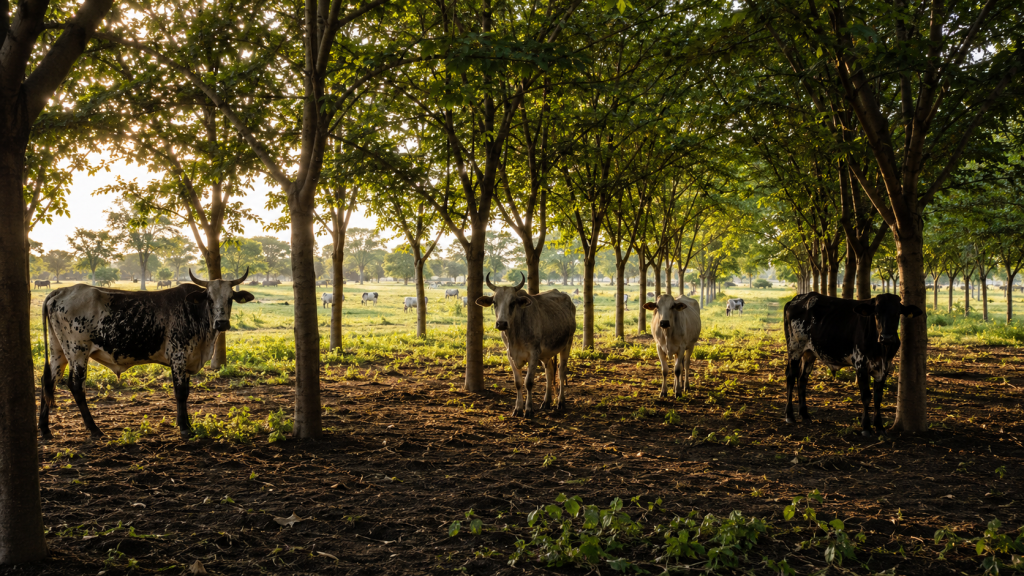
Instead of clearing a forest to plant crops, why not plant crops inside or alongside the forest? Agroforestry integrates trees into agricultural landscapes. The trees provide shade, fix nitrogen in the soil, and offer secondary crops (like nuts or fruit), while the ground crops benefit from a more stable microclimate.

2. Regenerative Agriculture

This isn’t your grandfather’s industrial farming. Regenerative practices focus on soil health. By using cover crops, no-till farming, and managed grazing, farmers can actually turn their soil into a carbon sink just like we discussed in our last article. Healthy soil holds more water, requires fewer chemicals, and crucially stops the pressure to clear more forest land because the existing land stays productive longer.

3. Precision & Vertical Farming

By moving high-intensity crop production (like leafy greens) into vertical indoor farms or using AI-driven precision tools to skyrocket yields on existing plots, we can produce more food on less land. This “land sparing” allows us to leave existing forests alone, and even give some land back to nature.


The Verdict: A Synergistic Future

Agriculture doesn’t have to be the enemy of the forest. In fact, if we want to heal the environment, we need farmers to be the primary stewards of the land. We can’t simply wall off the entire planet into “nature” and “human” zones; we have to learn to produce food in a way that mimics the forest’s natural cycles.

The goal isn’t just to stop the bleeding (deforestation) or to apply a bandage (afforestation). The goal is to build a food system that functions like an ecosystem.

Healing the Earth from Ground Up with Regenerative Agriculture: A Possibility or a Facade?

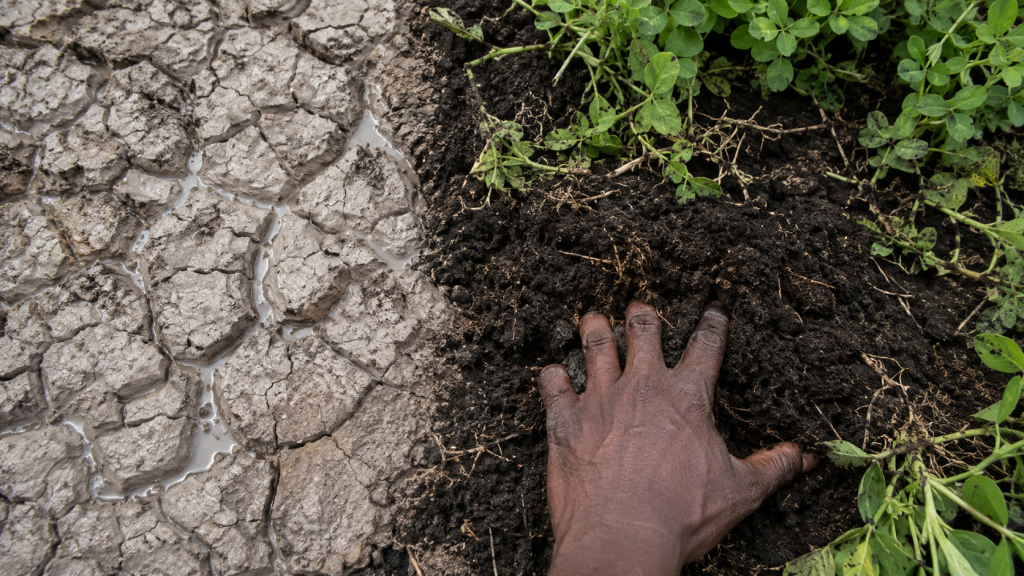
Ten years ago, Segun stood on the edge of his family’s north field and saw something that broke his heart: gray, cracked earth that looked more like concrete than a cradle for life. Decades of heavy tilling and chemical “quick fixes” had left the land exhausted. When the rain came, it didn’t soak in; it simply washed the precious topsoil away into the nearby creek.

But today, if you walk that same field on Segun’s farm, the ground feels like a sponge. It’s dark, crumbly, and teeming with earthworms. Segun didn’t just save his livelihood; he invited nature back to the table. By switching to Regenerative Agriculture, he proved that we don’t have to choose between feeding our communities and saving the planet. We can do both, starting with the very dirt beneath our boots.


Beyond Sustainability: What is Regenerative Agriculture?

You’ve likely heard the word “sustainable” a thousand times. But while sustainability aims to keep things from getting worse, Regenerative Agriculture is more ambitious it aims to make things better.

Think of it as a holistic philosophy. Instead of treating a farm like a factory where you “input” chemicals to “output” food, regenerative agriculture treats the land as a living ecosystem. The goal is to restore the organic matter in the soil, which has been depleted by industrial farming over the last century.

The Four Pillars of Soil Restoration

To understand how healing the earth is possible, you have to look at the practices that turn “dirt” back into “soil”:

  • Minimizing Soil Disturbance: By practicing “no-till” farming, the underground “internet” of fungi and microbes stays intact.
  • Keep the Soil Covered: Soil should never be naked. Using cover crops protects the ground from erosion and keeps living roots in the system year-round.
  • Plant Diversity: Nature hates a monoculture. Rotating different types of crops breaks pest cycles and naturally balances the nutrients in the dirt.
  • Integrating Livestock: When managed correctly, grazing animals mimic natural herd movements, providing natural fertilization and helping to cycle nutrients back into the earth.

The “Sponge Effect”: Can Soil Really Fight Climate Change?

The science is simple but profound. Healthy soil acts as a carbon-rich sponge.

  1. Carbon Sequestration: Through photosynthesis, plants pull CO2 from the atmosphere and pump carbon sugars through their roots to feed soil microbes. This effectively “locks” carbon underground.
  2. Water Management: For every 1% increase in soil organic matter, an acre of land can hold an additional 20,000 gallons of water.

This means that during a drought, a regenerative farm stays green longer. During a flood, the soil absorbs the water instead of letting it run off and cause damage.


The Bottom Line: Does It Increase Yield?

There is a common misconception that choosing the environment means sacrificing productivity. While there is often a transition period where the land needs to “detox” and heal, the long-term data tells a different story:

MetricConventional FarmingRegenerative Farming
Input CostsHigh (Synthetic fertilizers & pesticides)Low (Biological processes do the work)
ResilienceLow (Vulnerable to weather extremes)High (Soil holds moisture and nutrients)
Yield StabilityDeclines as soil health failsIncreases and stabilizes over time
Nutrient DensityOften lowerSignificantly higher

By focusing on the health of the soil, you aren’t just growing more food; you’re growing better food. Plants grown in nutrient-rich soil are naturally more resistant to pests and disease, reducing the need for expensive chemical interventions and increasing the farmer’s profit margins.


A Future Rooted in Hope

So, is it possible to heal the earth from the ground up? The answer is a resounding yes. Farmers like Segun are living proof that when we work with nature instead of against it, the earth responds with abundance.

The numbers back this up: scientific studies, including the Rodale Institute’s 40-year trial, show that regenerative systems can produce 31% higher yields than conventional farms during years of extreme drought due to their superior water-holding capacity. For every 1% increase in soil organic matter, the land can hold an additional 20,000 gallons of water per acre, effectively “climate-proofing” the farm. Furthermore, while there is often a brief transition period, research from the Ecdysis Foundation found that regenerative corn farms were 78% more profitable than their conventional counterparts. This financial success stems from a massive reduction in expensive synthetic inputs fertilizers and pesticides combined with higher soil productivity, proving that restoring the earth is not just an environmental necessity, but a superior economic model.

Regenerative agriculture isn’t just a set of techniques; it’s a commitment to leaving the world better than we found it. It’s a way to ensure that the soil remains a source of life for generations to come.

Value Addition vs. Raw Produce: Which Makes Farmers Richer?

At Exploreland Farms, we believe that farming is not just an industry, it is an art form rooted in the stewardship of the land. However, for the modern farmer, the question of “how to grow” is increasingly being replaced by “how to earn.” In the quest for a sustainable and prosperous agricultural future, one debate stands above the rest: Value Addition vs. Raw Produce.

While traditional farming focuses on the volume of the harvest, the future of “luxury with a soul” lies in the transformation of that harvest. To understand this shift, we look no further than the story of a boy, a bag of beans, and a vision that changed a family legacy.


The Cocoa Alchemist: A Tale of Two Futures

For decades, Samuel’s father followed a rigid tradition: harvest the cocoa pods, ferment the beans, dry them under the sun, and sell the burlap sacks to an exporter. The price was always set by someone in a high-rise building thousands of miles away.

Samuel, however, saw things differently. Every harvest, he would “borrow” a few kilograms of the finest, purest beans from his father’s shed. While his father focused on the tonnage of the export, Samuel retreated to the kitchen. He experimented with roasting, grinding, and tempering, creating small, hand-wrapped bars of dark chocolate infused with local sea salt.

At first, he gifted them to friends. Then, he sold them at local markets. By the time Samuel turned twenty-five, his “little hobby” had evolved into a premium confectionery brand.

The turning point came when Samuel’s father realized he was making more profit from the 10% of the crop Samuel bought from him than he was from the 90% he sent overseas. Today, the father no longer exports a single bean. He produces the raw material in its purest, most organic form, and sells it directly to his son’s factory. The family went from being commodity price-takers to luxury brand-makers.


Why the Shift Works: The Reality of Raw Produce

Selling raw produce, whether it’s cocoa beans, crates of tomatoes, or liters of fresh milk; is the backbone of global food systems. It is immediate and keeps the supply chain moving.

The Catch: Raw produce is a commodity. This means the price is dictated by global market fluctuations rather than the farmer’s hard work.

  • The Profit Gap: Statistics show that the farmer’s share of the consumer’s food cost has steadily declined. In many regions, a farmer may only earn roughly 15% to 20% of the final retail price.

The Power of Value Addition

Value addition is the process of changing the physical form of a product to enhance its worth. At Exploreland, this is the blueprint of our Exploreland Markets and Farm-2-Table philosophy.

1. Price Stability & Premiums

By converting raw cocoa into artisanal chocolate just as Samuel did, a farmer moves from selling a perishable commodity to a luxury product. You no longer compete with every other farmer; you compete on quality, taste, and brand story.

2. Waste Reduction

In raw agriculture, “ugly” or undersized produce is often discarded. In value-added agriculture, those same items become gourmet sauces, dried fruits, or essential oils. This transforms potential loss into 100% profit.

3. Traceability as Luxury

Modern consumers are willing to pay a premium for traceability. When a farmer packages their own produce, they are selling the “truth” of how that food was grown. At Exploreland, our commitment to clean quality and eco-stewardship adds the ultimate value to every item.


The Comparative Math

To understand the impact, let’s look at the “Samuel Effect.” If we calculate the difference between selling a raw kilo of cocoa versus a finished luxury bar:

Value Multiplier = Price of Finished Product \ Price of Raw Material

In the world of chocolate, the value multiplier can often exceed 10x. While the initial investment in machinery and branding is higher, the long-term Net Return is significantly more robust:

Net Profit = (Retail Price * Volume) – (Production + Marketing Costs)


The Verdict: Which Path Wins?

If the goal is survival, raw produce works. But if the goal is wealth and sustainability, value addition is the clear winner.

Exploreland Insight: True wealth in farming comes from capturing the “Marketing Share” of the food dollar. By owning the process from soil to shelf, farmers transition from price-takers to price-makers.

At Exploreland Farms, we aren’t just growing crops; we are growing a lifestyle. By integrating sustainable agro-forestry and direct-to-consumer markets, we ensure that the value created by the land stays with the people who nurture it.

Deep Roots, High Yields: Gmelina Planting Across Diverse Soil Types

Gmelina arborea (White Teak) is celebrated in agroforestry as a “miracle tree” for its incredibly fast growth and valuable timber. Investors and farmers are often drawn to its potential for quick returns. However, there is a catch: Gmelina is not a cactus, nor is it a mangrove. While adaptable, its growth rate and ultimately your profit margin is inextricably linked to the soil it is planted in.

Planting Gmelina is not a “one-size-fits-all” operation. A strategy that yields a towering timber tree in a fertile river valley may result in a stunted shrub on a sandy hill.

This article articulates the critical importance of soil identification and outlines specific planting strategies targeted at different soil textures to maximize the success of your Gmelina plantation.

Why Soil “Type” Dictates Your Success

Before digging the first hole, it is crucial to understand what soil actually does for the tree. Soil is not just dirt; it is the tree’s anchor, its water reservoir, and its nutrient pantry.

Gmelina is a demanding species. To achieve its famous rapid growth (sometimes several meters in a year), it requires:

  1. Easy Root Penetration: The soil must be loose enough for roots to spread deep and wide quickly.
  2. Aeration: Roots need oxygen. Highly compacted or waterlogged soil suffocates them.
  3. Moisture Availability: It needs consistent moisture but cannot tolerate sitting in stagnant water.

The “type” of soil, defined by the balance of sand, silt, and clay determines how well these three requirements are met.

Scenario 1: The Gold Standard (Loamy and Alluvial Soils)

These are the dream soils for Gmelina. They are usually found in valleys, near riverbanks (alluvial deposits), or in well-managed agricultural land.

Characteristics:

  • Texture: A perfect balance of sand, silt, and clay. It feels crumbly, dark, and holds moisture without becoming soggy.
  • Why it works: It offers low resistance to root growth, is naturally fertile, and drains freely while retaining enough water for dry spells.

The Planting Strategy: “Maximize Speed”

On these sites, your goal is to get the tree established quickly so it can utilize the abundant resources.

  • Site Prep: Minimal land clearing is needed. Avoid heavy machinery that might compact this excellent soil.
  • Pit Size: A standard pit of 30cm x 30cm x 30cm is usually sufficient. The surrounding soil is already loose enough for roots to penetrate easily.
  • Planting: Place the seedling straight. Backfill with the topsoil that was dug out.
  • Maintenance: The biggest challenge here is weeds, which also love fertile soil. Aggressive weeding in the first two years is critical so the Gmelina doesn’t face competition.

Scenario 2: The Heavy Hitters (Clay and Clay-Loam)

Clay soils get a bad reputation, but they can actually support good Gmelina timber density if managed correctly. They are common in many tropical regions.

Characteristics:

  • Texture: Heavy, sticky when wet, and cracks into hard blocks when dry.
  • The Challenge: Poor aeration and drainage. If a small hole is dug in heavy clay, it can act like a pot, trapping water and drowning the roots. When dry, it becomes like concrete, restricting root spread.

The Planting Strategy: “Amend and Aerate”

The goal here is to break up the compaction around the root ball and improve local drainage.

  • Pit Size: You must dig bigger. A pit of at least 50cm x 50cm x 50cm is recommended. This is not for the root ball’s current size, but for its future growth.
  • Crucial Step – Amending the Backfill: Do not just put the heavy clay clods back into the hole.
    • Mix the excavated clay soil with organic matter (compost, rotted manure) or even some sand if available.
    • This creates a looser “micro-environment” around the young roots, allowing them to establish before hitting the harder surrounding clay.
  • Timing: Never plant in heavy clay immediately after heavy rain when the soil is sodden.

Scenario 3: The Challenging Terrain (Sandy and Lateritic Soils)

These soils are common in upland areas or degraded lands. Gmelina can survive here, but without intervention, it will likely be stunted and branchy rather than tall and straight.

Characteristics:

  • Sandy Soil: Gritty, drains water instantly, and holds very few nutrients.
  • Lateritic Soil: Often reddish, acidic, iron-rich, and sometimes rocky or shallow.
  • The Challenge: Drought stress and starvation. The tree cannot find enough water or food to sustain rapid vertical growth.

The Planting Strategy: “The Sponge Technique”

Your entire focus must be on water retention and nutrient supplementation.

  • Pit Size: Similar to clay, you need a larger pit (50cm x 50cm x 50cm).
  • Amending the Backfill: This is vital. You must add significant amounts of organic matter (compost, manure) to the sandy soil before putting it back in the hole. The organic matter acts as a “sponge,” holding moisture near the roots that would otherwise drain away instantly.
  • Fertilizer: An initial application of NPK fertilizer at planting time is often necessary on these hungry soils to give the seedling a head start.
  • Mulching is Non-Negotiable: You must apply a thick layer of dry grass or leaves around the base of the sapling (leaving space around the stem). This prevents the sun from evaporating the little moisture the soil holds.

The Dealbreaker: Waterlogged Soils

It is vital to recognize where Gmelina will not work.

If an area remains swampy, has standing water for weeks after rain, or has a very shallow water table, do not plant Gmelina there. The roots will rot, and the trees will die back. No amount of pit amendment will fix a fundamentally swampy site for this species.

Summary Table

Soil TypePit Size StrategyKey Action
Loam / AlluvialStandard (30x30x30cm)Focus on aggressive weeding to maximize natural growth.
Clay / HeavyLarge (50x50x50cm)Amend backfill to break compaction; ensure drainage.
Sandy / PoorLarge (50x50x50cm)Amend with organic matter to act as a moisture sponge; mulch heavily.
WaterloggedN/ADo not plant.

Conclusion

Gmelina arborea is a tremendous asset to forestry, but it is not magic. The difference between a harvest of high-value timber and a field of stunted bushes often lies purely in how the soil was managed at the planting stage. By identifying your soil type and adjusting your pit size and backfilling strategy accordingly, you give your plantation the foundation it needs to thrive.

Compare