
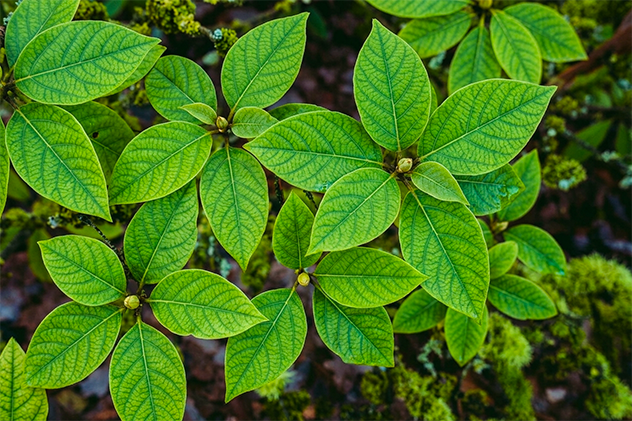
In the world of forestry, time is often the biggest barrier to entry. Traditional hardwoods can take decades, sometimes even a lifetime, to reach a harvestable size. However, as global demand for wood products skyrockets, a new category of “sprinter” species is taking center stage. Leading this pack is Gmelina arborea, a tree that is redefining the speed of the “tree economy” and providing a sustainable solution for industrial wood needs.
In the context of industrial forestry, Sprinter Species refers to trees characterized by high photosynthetic efficiency and rapid biomass accumulation, allowing them to reach economic maturity in a fraction of the time required by traditional hardwoods. While a slow-growing marathon tree like Oak or Mahogany focuses on high-density wood over decades, a sprinter is biologically programmed to prioritize vertical and radial growth to capture the canopy as quickly as possible.
Other Notable Sprinters
While Gmelina is a top contender, the industrial forestry landscape features several other high-velocity species:
- Eucalyptus (Eucalyptus spp.): Perhaps the most widely planted industrial tree globally, known for being incredibly hardy and producing vast amounts of biomass for pulp and charcoal.
- Acacia (Acacia mangium): A nitrogen-fixing sprinter often used to rehabilitate degraded soils while providing wood for furniture and pulp.
- Poplar (Populus spp.): The sprinter of the temperate world, widely used in the Northern Hemisphere for matches, crates, and plywood.
- Bamboo: Though technically a grass, it is the ultimate biological sprinter, reaching full height in a single growing season and maturing for harvest in just 3 – 5 years.
Why Gmelina Trumps the Competition
While Eucalyptus and Acacia are formidable, Gmelina arborea is often preferred in specific tropical industrial contexts for several key reasons:
1. The Working Quality of the Wood
Unlike Eucalyptus, which can be prone to growth stresses that cause the wood to split or warp during sawing and drying, Gmelina is remarkably stable. It has a straight grain and a uniform texture that makes it much easier to machine, peel for veneer, or turn into high-quality plywood.
2. Aesthetic Versatility
Gmelina produces a beautiful, creamy-white to pale yellow wood that takes stains and paints exceptionally well. While many other fast-growers produce dark or inconsistent colors, Gmelina’s “blank canvas” look makes it highly desirable for the furniture and interior decor industries.
3. Termite and Decay Resistance
In tropical climates, wood longevity is a major concern. Gmelina contains natural extractive compounds that make its heartwood moderately resistant to decay and termite attacks; a significant advantage over many other soft-textured “sprinter” woods.
4. Environmental Footprint
One of the primary criticisms of Eucalyptus is its “water-greedy” nature, often drying out local water tables. Gmelina is generally considered more “neighborly” to the surrounding ecosystem. Its large, deciduous leaves drop annually, creating a thick mulch layer that suppresses weeds and returns vital nutrients to the topsoil, essentially “self-fertilizing” the plantation.
5. The Perfect Density Balance
Many sprinters grow so fast that their wood is too soft or “spongy” for structural use. Gmelina hits a sweet spot; it is light enough for easy transport and processing, yet dense enough to hold screws and nails securely, making it a true multi-purpose industrial timber.
The Need for Speed: Meeting Global Demand
The global appetite for pulp, paper, and plywood is relentless. As the world moves away from single-use plastics and toward wood-based construction and packaging, the pressure on natural forests has reached a tipping point.
Industrial forestry requires “sprinter” species because traditional slow-growing forests simply cannot keep pace with market cycles. If an industry has to wait 40 years for a harvest, it cannot respond to sudden shifts in the global economy. Fast-growing plantations act as a “pressure valve,” providing a reliable, high-volume supply of timber that protects old-growth, high-biodiversity forests from being cleared for industrial use.
Biology of the Best: A Deep Dive into Gmelina Arborea
Among the giants of industrial forestry, Gmelina arborea (often simply called Gmelina) stands out as a biological marvel. Originally native to Southeast Asia but now thriving across the tropical belts of Africa and Latin America, Gmelina is prized for its extraordinary growth rate.
- Growth Velocity: In optimal tropical conditions, Gmelina can grow up to 3 meters in its first year and reach a harvestable diameter for pulp in as little as 5 to 7 years.
- Fiber Quality: Its wood is remarkably versatile. It produces a creamy-white timber that is lightweight yet surprisingly strong. Its high-quality fiber makes it a premier choice for the pulp and paper industry, while its stability makes it ideal for plywood, light furniture, and particleboard.
- Resilience: The tree is famously hardy, capable of thriving in a variety of soil types and showing a strong resistance to many common pests that plague other industrial monocultures.
From Nursery to Harvest: The Technical Cycle
Managing a fast-rotation timber plantation is more akin to high-precision farming than traditional “set it and forget it” forestry. The technical cycle requires meticulous planning to ensure maximum yield:
- Nursery Excellence: The cycle begins with superior genetic stock. Seedlings are nurtured in controlled environments to ensure high germination rates and robust early growth.
- Strategic Spacing: Unlike wild forests, Gmelina is planted in precise grids (typically 3m x 3m). This spacing allows for mechanical maintenance while ensuring every tree gets the sunlight it needs to fuel its rapid metabolism.
- Active Management: Because these trees grow so fast, they are hungry. Silviculture practices, including early weeding and strategic thinning are essential to ensure the nutrients in the soil go directly into the most promising trunks.
- The Harvest: Within 6 to 10 years, the plantation is ready. The clear-felling and immediate replanting cycle ensure that the land remains productive and carbon-sequestering year after year.
Diversifying the Portfolio: The Tiered Financial Model
While Gmelina is a powerhouse for quick turnover, the most sophisticated forestry projects use a tiered return model. This involves mixing fast-growing industrial species with slower-growing, high-value hardwoods.
- Short-Term (5 – 10 Years): Gmelina provides the “cash flow.” These early harvests cover the operational costs of the farm and provide early dividends to stakeholders.
- Long-Term (20+ Years): Meanwhile, species like Teak or Mahogany grow quietly in the background. These are the savings accounts trees that require more patience but yield significantly higher market prices per cubic meter once they mature.
By diversifying the species on a single plot, landowners create a balanced ecosystem that is both financially resilient and ecologically diverse.
In conclusion, the integration of fast-growing species like Gmelina into the global supply chain is no longer just an option; it is a necessity. By treating timber as a renewable crop rather than a finite resource, we can satisfy the world’s industrial hunger while allowing our natural, ancient forests to remain standing.